Author: Megan Horneman | Chief Investment Officer
Key Takeaways:
- 3Q26 S&P 500 earnings season kicks off this week.
- Earnings strength broad with all 11 sectors reporting growth.
- Energy gets a boost from elevated prices.
- Be careful of concentration risk in select sectors (e.g., energy, tech, financials).
- Earnings are likely to be strong but concerns around margins likely to materialize.
3Q26 Earnings Season Kicks Off – Strong Earnings Expected to Continue
S&P 500 companies will begin reporting 3Q26 earnings this week, with the major banks kicking things off (e.g., JPMorgan, Wells Fargo, Citi). According to FactSet, S&P 500 earnings are expected to grow 29.6% (YoY), marking the third consecutive quarter of growth above 25% (YoY). It would also be the eighth consecutive quarter of double-digit growth.
Analysts typically lower their estimates throughout the quarter, although in 3Q26 analysts raised their estimates by 1.4%, compared to an average cut of ~4% over the past 20 years. Of the S&P 500 companies that issued guidance for the quarter, 62% provided a positive outlook, which is well above the 10-year average of 41%. In this Weekly Insights, we provide a preview of what to expect in 3Q26 earnings season.
- Broad-based earnings and revenue growth:
According to Factset, “all eleven sectors are projected to report year-over-year earnings growth. Five of these 11 sectors are predicted to report double-digit growth, led by the energy, information technology, communication services and materials and industrial sectors.”
- Energy:
The average price of crude oil is 32% higher in 3Q26 than in 3Q25. As a result, the sector has recorded an 18.7% increase in earnings expectations since June 30th. However, energy sector earnings are highly concentrated in four names that have seen an increase to their estimate of more than 10%. “Marathon Petroleum ($23.06 from $10.43), Valero Energy (to $18.88 from $9.66), Phillips 66 (to $10.99 from $6.38), and Exxon Mobil (to $3.71 from $3.36)”
- Info tech:
Info tech earnings estimates have been revised higher by 5.1% since the beginning of the quarter. The year-over-year earnings growth for info tech has increased to 65% today from 57% on June 30th. This growth has been led by both NVIDIA and Micron. Tech has seen more broad based optimism with 82% of the companies in the sector seeing an increase to their 3Q estimates.
- Financials:
According to FactSet, on a percentage basis, the financial sector has recorded the third largest increase in earnings estimates moving to $123.3 Billion from $121.3 Billion. The largest contributor to the change in estimates is JPMorgan.
- MAG 7 earnings growth:
The MAG 7 is expected to grow earnings by roughly 37% in 3Q26, compared to the ~25% increase expected for the other 493 companies. This growth is very concentrated with NVIDIA, Meta, and Microsoft expected to account for about 93% of the Mag 7 earnings growth.
The Bottom Line:
Actual S&P 500 earnings growth has beaten the estimate from the start of the quarter in 37 out of the past 40 quarters (exception was 1Q20, 3Q22, 4Q22). Given that economic growth has remained solid, we expect the trend to continue in 3Q26.
Financials will likely benefit from loan growth, stable credit and management fees but face the headwind of higher 10YR yields. Energy may see the largest percentage increase but the sector is highly concentrated. Tech appears to be the sweet spot with continued spending. However, we are watching margins closely due to the rising costs of materials and energy.
LISTEN NOW: Markets With Megan
Your Economic and Market Detailed Recaps
- Service sector slows modestly.
- Trade balance widens on higher imports.
- Consumer confidence slips in October.
- Global equities rally led by U.S.
- The rise in yields takes a breather.
- Commodities rally on weather concerns.
Weekly Economic Recap — Service Sector Shows Strain from War with Iran
Activity in the service sector, as measured by the ISM Services Index dipped slightly in September. While the Index has been in expansion territory (a level above 50) for the past 27 consecutive months there are signs that the prolonged war with Iran is impacting economic activity. The supply chain disruption is showing up in the backlog of orders which is at the highest since 2022 and prolonged delivery times. In addition, the prices paid component rose to the highest level since July 2022 due to the rise in fuel costs.
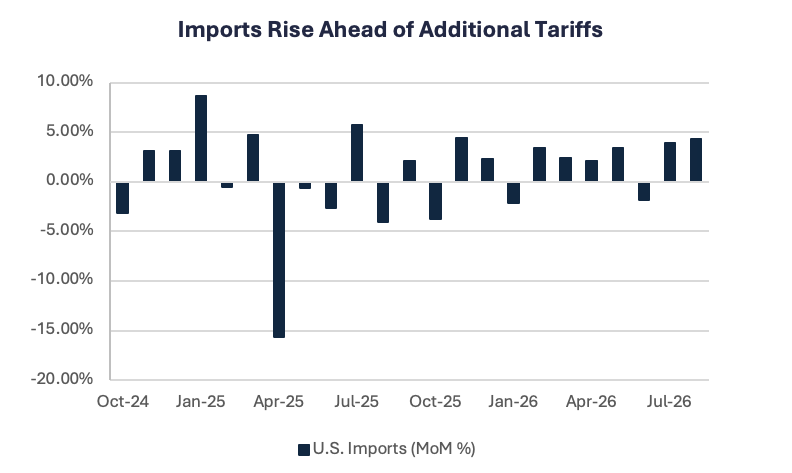
The U.S. trade balance widened more than expected in August (to -$105.6 billion vs. $102.1 billion est.). Imports grew at the fastest pace in nine months while export growth was more muted (+1.4% MoM). The gains in imports were led by non AI related industrial supplies which may be companies front running the new tariffs on Canadian products that took effect in late August.
Consumer confidence as measured by the University of Michigan Consumer Sentiment Index dropped to a five month low in October. The weakness was led by confidence on the future as consumers are concerned about higher interest rates and household finances. In addition, consumers increased their expectation for inflation over the next 12 months to a five month high.
Weekly Market Recap — Global Equities Rise on Lesser Chances of Rate Hikes
Equities:
The MSCI AC World Index rallied for the second time in the past five weeks led by U.S. equities. Within the U.S. the Russell 1000 Value Index led the gains and outperformed the Russell 1000 Growth Index by the most in seven weeks. Small and midcap stocks underperformed due to concern about higher interest rates.
Fixed Income:
The Bloomberg Aggregate Index rose for the first week in the past six. Yields fell (prices up) after the White House said there would not be additional strikes in Iran before the midterm.1 In addition, odds of an October rate hike moderated with weaker service sector data. Emerging market bonds and investment grade credit led the gains.
Commodities/FX:
The Bloomberg Commodity Index rose for the first time in three weeks led by gains in crude oil. Crude oil jumped on concerns about supply disruption with the first hurricane this season to make landfall. Copper rebounded last week after Chinese demand accelerated and supply concerns emerged with union strikes in Chile.
Footnotes: Data is as of August 2026.
Data Source: Bloomberg Finance LP, Verdence Capital Advisors.
Frequently Asked Questions:
1. When does Q3 2026 earnings season start?
A: S&P 500 companies begin reporting third-quarter 2026 results the week of October 12, 2026. Major banks such as JPMorgan, Wells Fargo and Citi report first. Bank results often set the early tone because they reflect loan demand, credit conditions and consumer activity.
2. Are S&P 500 earnings expected to grow in Q3 2026?
Yes. According to FactSet, all 11 S&P 500 sectors are projected to report year-over-year earnings growth. Five sectors are expected to post double-digit gains: energy, information technology, communication services, materials and industrials. Analysts also raised their estimates during the quarter, which is less common than cutting them. Estimates can change as companies report.
3. Why is concentration risk a concern this earnings season?
Much of the expected growth comes from a small number of companies. In energy, a few refiners and producers account for most of the increase in estimates. Within the Magnificent 7, three companies are expected to drive most of the group’s growth. When growth is this narrow, results from a few companies may have an outsized effect on sector and index outcomes.
4. How are higher oil prices affecting energy sector earnings?
Crude oil prices averaged notably higher in Q3 2026 than a year earlier, and energy earnings expectations have risen since the end of June. Energy may post the largest percentage increase of any sector this quarter. The gains are concentrated in a few companies whose estimates rose sharply.
5. What could pressure corporate profit margins in Q3 2026?
Rising costs for materials and energy may weigh on margins even if headline earnings hold up. Financials face a separate headwind from higher 10-year Treasury yields, though loan growth, stable credit and management fees may help. Megan Horneman, Chief Investment Officer, says Verdence is watching margins closely as results come in.
